































































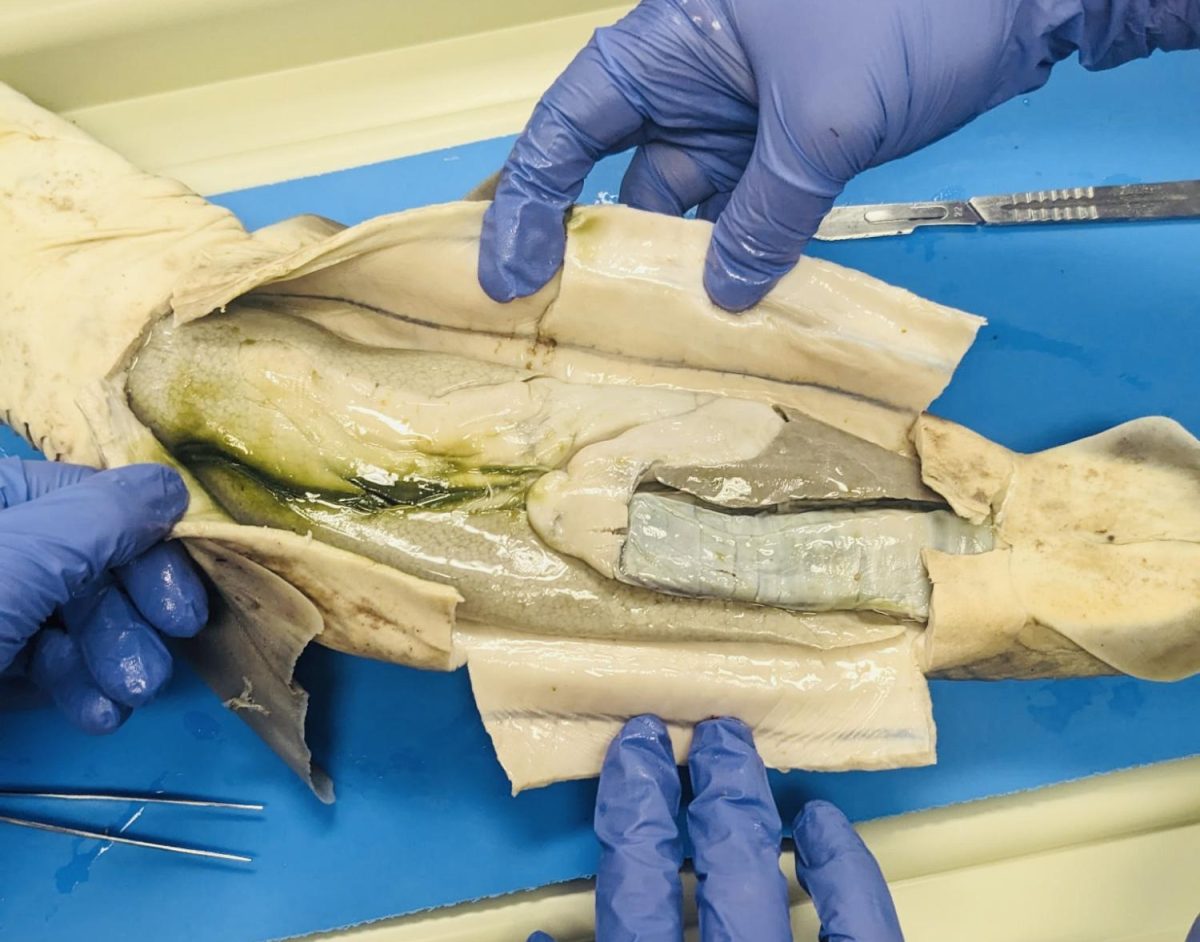
Almost every middle and high schooler will take a class that requires them to dissect a small animal. This practice has ingrained itself in our culture, appearing in books and movies alike. Although some may call the morality of this practice on a larger scale into question, its collective educational value clearly outweighs these concerns.
According to Britannica.com, Dissecting has been a common practice in science from as early as circa 500 BC, tracing all the way back to the Greeks. People such as Aristotle, Herophilus and Erasistratus performed them to discover the functions of living organisms. Even back then, people saw the inherent value in dissections.
Although common practices, regulations and general knowledge of biology and antimony have changed over time, there is still value in animal dissection
“A 2022 study found that 83% of teachers surveyed in Switzerland agreed that dissection is a valuable part of teaching biology in schools,” according to `Britannica.com. The classroom is most obvious example, but it does extend further.
There are arguments that there are other methods and dissections are unnecessary but according to Britannica.com, “70% disagreed that alternatives are just as good as animals or animal parts for teaching biology,” clearly pointing the value of hands-on activities. There is simply nothing better in education than interacting with the concepts being learned.
Concerns on the sourcing of animal carcasses makes up the majority criticisms against dissection, and this claim does have some evidence to stand on.
According to Britannica.com, “Many of the animals used in classroom dissections are purchased from biological supply companies. An estimated 99% of animals used in dissections are caught in the wild, a practice that may decrease local populations, lead to an imbalance in the ecosystem.” This is an important reality that needs to be addressed. If studying life actively damages it, then you can argue it isn’t worth studying.
This can be remedied through more ethical sourcing. Using farm-grown animals does stop the damage to the ecosystem, but it has its own issues, both for their value educationally and morally.
Animal dissection may have its problems, but overall, it positively affects the overall development of students and the scientific community as a whole.